Deep Tissue Massage: What It Is and What Are Its Benefits
Deep tissue massage is the most effective massage technique for chronic muscle pain, but most people don't know exactly what it does to their body or if it's right for them. In this article, you'll see what it is, how it's done, its proven benefits, contraindications, and when it's worth doing it.
What is Deep Tissue Massage?
Deep tissue massage is a therapeutic massage technique that targets the deeper layers of muscles, tendons, and connective tissue (fascia). Unlike a relaxation massage, the therapist uses increased, focused pressure and slow movements to reach below the superficial muscle layer and break up so-called adhesions, which are areas where muscle fibers have become "stuck" due to injury, chronic tension, or overuse.
References to its use date back to Ancient Greece and Egypt, but it was defined as a separate therapeutic method in the 20th century as an evolution of Swedish massage.
A point that confuses many: deep tissue does not mean “very strong” or “painful.” It means targeted and precise. A good session does not depend on how much force the therapist uses, but on how well he knows anatomy and technique.
How Deep Tissue Massage Is Done: The Technique
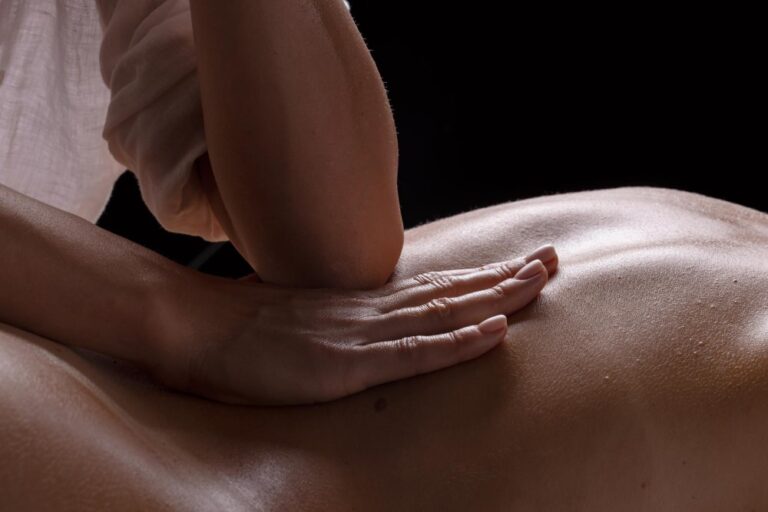
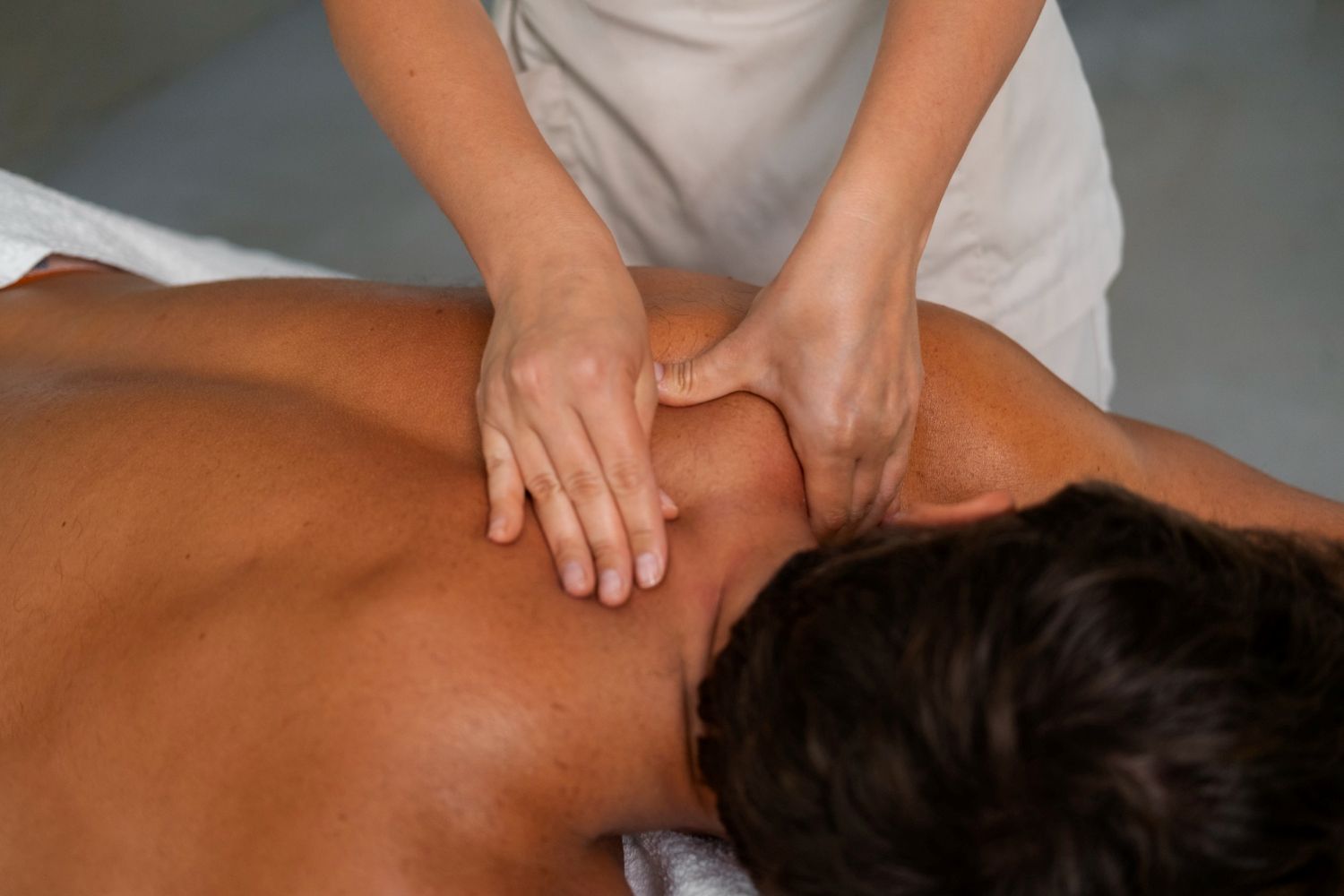
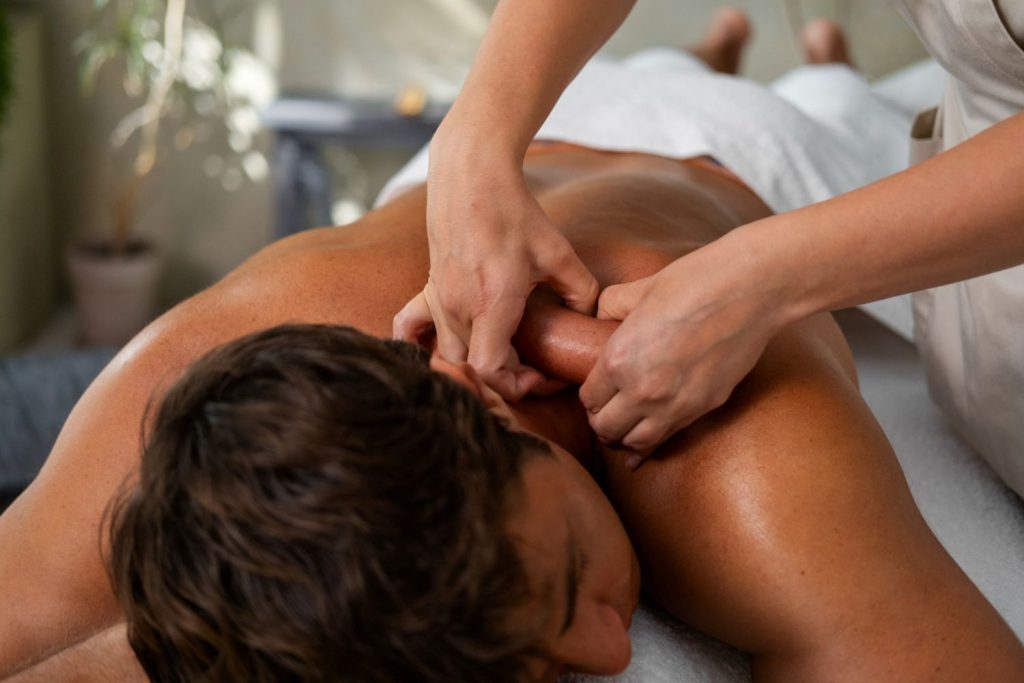
The therapist uses fingers, palms, fists and often elbows and forearms to apply deep, steady pressure along the muscle fibers. The session always begins with lighter strokes to warm up the area and then progresses to deeper work.
The four basic elements of the technique: slow speed, steady pressure without sudden movements, direction along the fibers, and targeting specific areas. The most common target areas are the neck, shoulders, back, and waist.
What are the Benefits of Deep Tissue Massage?
The benefits of deep tissue massage are backed by research, not just promises. Let's look at them one by one:
Relief from chronic pain
It is the main benefit and the most well-documented. Deep tissue massage increases blood flow to affected areas, reduces inflammation, and breaks up adhesions that continually activate nerve pain signals. Research shows that it can relieve chronic back, neck, and shoulder pain as effectively as some painkillers, without their side effects.
Lowering blood pressure
A study in the Journal of Alternative and Complementary Medicine showed that even a single session can reduce systolic, diastolic, and mean arterial pressure measurements. The mechanism: release of endorphins that relax blood vessels and activation of the parasympathetic nervous system.
Improving mobility and flexibility
Tight muscles limit range of motion. Deep tissue massage allows the muscle to return to its natural length. The result is immediately noticeable: better head rotation, less stiffness, freer movements.
Faster recovery from injuries
That's why many athletes use it. The increased blood flow to the area brings oxygen and nutrients, while "flushing" lactic acid after intense exercise. Result: less DOMS and a faster return to training. Because of this, people confuse it with sports massage. They have a lot in common, but they are the same. You can see the differences here.
Reducing stress and anxiety
It may sound counterintuitive, but deep tissue massage lowers cortisol levels and increases serotonin and dopamine. The majority of people leave a session feeling noticeably calmer, even if the experience itself was intense.
Relief from sciatica and carpal tunnel syndrome
Deep tissue massage releases tissues that compress nerves. In sciatica, it focuses on the buttocks and piriformis muscle. In carpal tunnel syndrome, it reduces tension in the muscles of the wrist and forearm.
Deep Tissue vs Swedish Massage: What's the Real Difference?
Εδώ μπερδεύονται σχεδόν όλοι. Και οι δύο τεχνικές μοιάζουν εξωτερικά, αλλά η πρόθεση και το βάθος εργασίας είναι εντελώς διαφορετικά.
| Feature | Deep Tissue Massage | Swedish Massage |
|---|---|---|
| Pressure | High, focused | Light to moderate |
| Target | Deep muscle layer, fascia | Superficial muscles |
| Rhythm | Slow, specific | Flowing, continuous |
| Main purpose | Therapeutic, pain relief | Relaxation, well-being |
| Feeling after | Possible sensitivity 1-2 days | Instant relaxation |
| Suitable for | Chronic pain, injuries | Stress, general relaxation |
What to Expect at a Session
If you've never done it before, know what to expect so you're not surprised.
The session begins with lighter pressure to warm up the muscles. Then the therapist goes into the deeper layers. In areas with adhesions, you will feel some tension. This is “good pain”. However, if you feel intense pain, stop immediately.
After the session, drink plenty of water. You may feel some tenderness for 24 to 48 hours, as if you have exercised muscles you have not been using. This is normal and will pass.
Before and After the Session
|
Before |
After |
|---|---|
|
Inform the therapist about any injuries or medications |
Drink at least 500ml of water in the next 2 hours |
|
Don't eat a heavy meal 1-2 hours before |
Avoid strenuous exercise on the same day |
|
Wear comfortable clothes that are easy to take off. |
Use a heating pad if there is sensitivity. |
|
Tell the therapist clearly what areas are bothering you. |
Take notes for the next appointment. |
When Should You Avoid Deep Tissue Massage?
Contraindications
- Thrombosis or history of clots (deep pressure may mobilize a clot)
- Cancer, especially if there are metastases
- Advanced stage osteoporosis
- Open wounds, skin conditions, or inflammation in the area
- Recent surgery
- Taking anticoagulant medications
- First trimester pregnancy
If you have any of the above, talk to your doctor first.
How Many Sessions Are Needed for Results?
This depends on your goal and the history of the problem.
| Στόχος | Frequency | Time period |
|---|---|---|
| Chronic pain | 1 time/week | 4-6 weeks, then 1/month |
| Sports rehabilitation | 1 time/ 2 weeks | Depending on training |
| Prevention/maintenance | 1 time/ month | Continuous |
| Acute problem | After the inflammation subsides | Personalized |
A chronic problem that you've been building for months won't go away in one session. Many people go once, don't feel a huge difference, and give up. Wrong approach.
FAQ
Does it hurt?
There may be some discomfort, especially in areas with adhesions, but it should not be unbearable. If you experience severe pain, inform your therapist immediately.
Can I get deep tissue massage if I'm pregnant?
It is recommended to avoid it in the first trimester. In the second and third, it can be done with adjustments, always after medical advice.
How long does a deep tissue massage session last?
A typical full-body session lasts 60 to 90 minutes. If you're focusing on just one area, 30 to 45 minutes is enough.
Can I go to the gym afterwards?
Better not on the same day. The muscles need rest to absorb the treatment. Intense exercise immediately afterwards can negate some of the results.
How often should I get a deep tissue massage?
For chronic pain: once a week at first, then once a month. For maintenance: once a month is usually enough.
Is deep tissue massage safe for people with arthritis?
For osteoarthritis, it often helps. For rheumatoid arthritis in an exacerbation phase, avoid. Always consult your rheumatologist.
Conclusion
Deep tissue massage is one of the most effective non-drug solutions for chronic pain, muscle stiffness, and sports rehabilitation. Its benefits are documented and noticeable, but it works best when you know exactly what you're asking for, work with a trained therapist, and follow a series of sessions rather than a single visit.
If you recognize yourself in what we described above, it's time to make an appointment.